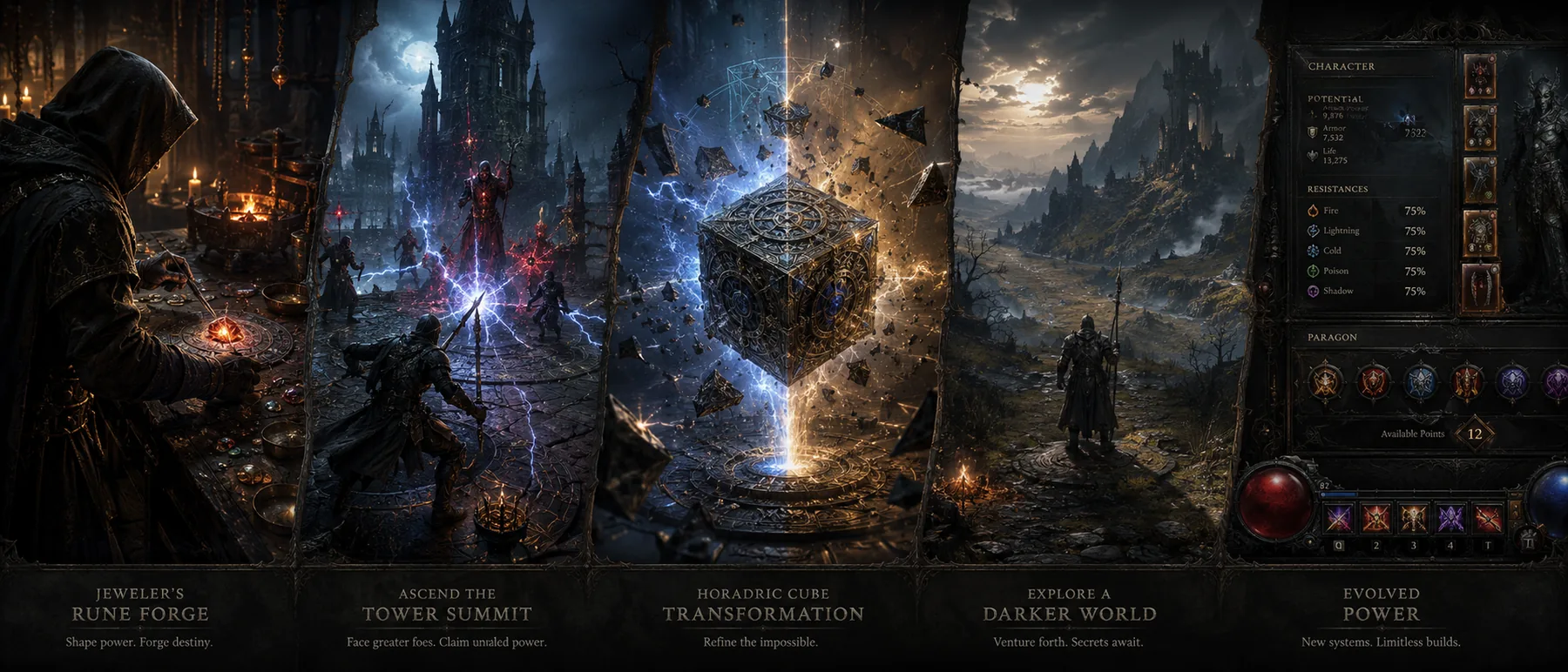
Season of Death Awakening Deep-Dive: Mythic Uniques 3.0, Pandemonium Ruptures, Solo Self Found, Tower and rewards.
In this guide
- Launch timing and the real question you should start with
- How Pandemonium Ruptures change seasonal pacing
- Mythic Uniques 3.0: where build power really comes from
- A quick class/build prediction for launch week
- Why SSF feels like a different game mode
- Tower, leaderboards, and the consistency angle
- QoL and side events that still matter
- Launch-week action checklist
- Quick verdict
Key Patch Takeaways
- Patch 3.1.0 (Season 14) is a sequence game. Reward value improves when you keep events running and chain actions cleanly.
- Mythic Uniques 3.0 is stronger because it’s more predictable. It’s easier to target slot upgrades without total chaos.
- Pandemonium Ruptures define the opening week. Prioritize rupture flow and pacing, not only top-end targets.
- Solo Self Found is now a true lane. If you select it, plan your economy, not impulse upgrades.
- Tower and leaderboards reward consistency. A controlled loop often outperforms raw burst cycles.

If you’ve been around Diablo IV long enough, you know patch notes can look clean on paper and still leave you feeling behind in practice.
Launch timing and the real question
Season of Death Awakening launches on June 30, 2026 at 10:00 a.m. PT, with early patch download on June 25.
The biggest strategic mistake is asking “what’s strongest?” right away.
The useful question is: “what loop am I committing to for the first two hours?”
That decision is importat more than any single class or build pick because this patch is built around duration and continuity.
Pandemonium Ruptures and the new pacing
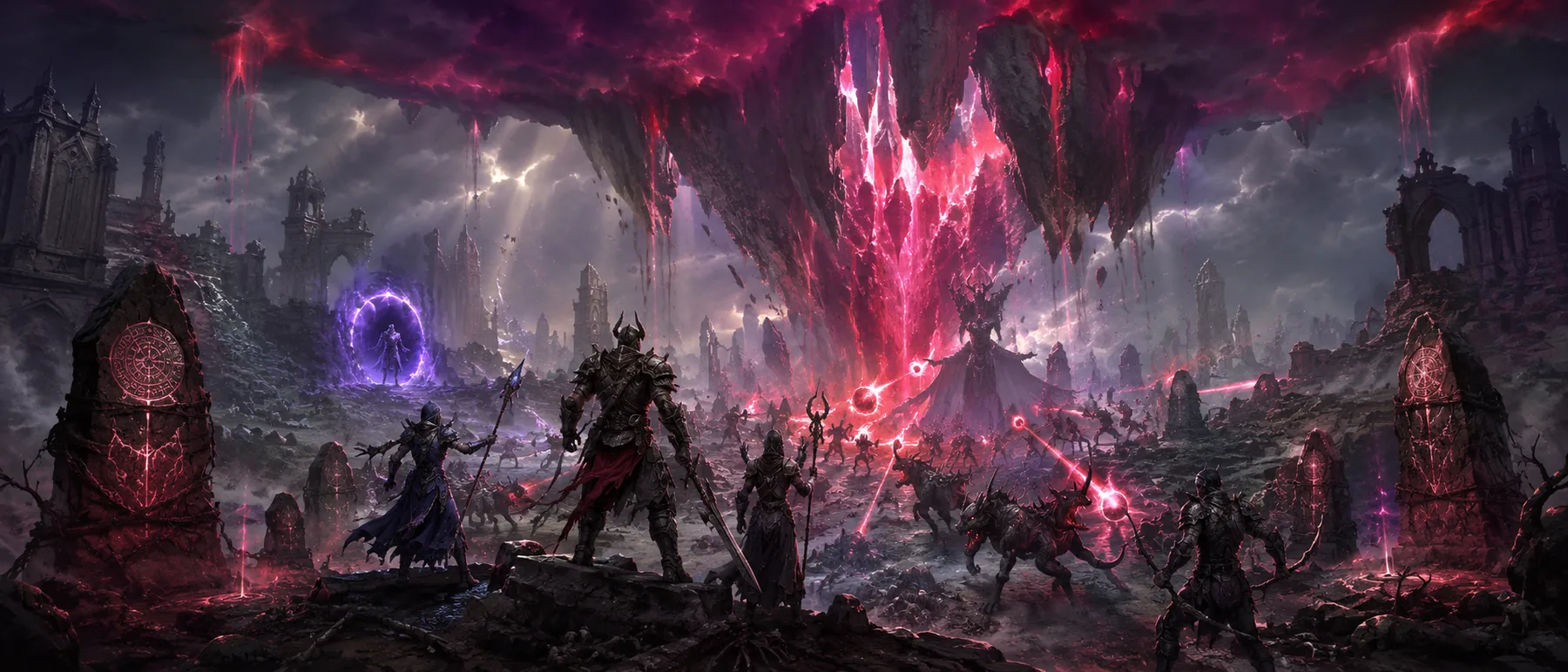
You’re not just clearing events in Season 14. You’re keeping pressure in place long enough to get rewarded.
The patch introduces three rupture families: Normal Ruptures, Surging Ruptures, and Colossal Ruptures.
Here’s the practical version people usually overlook: most players should treat this as a ramp.
- Normal becomes your early confidence loop (good practice, good reward pacing).
- Surging is where confidence and efficiency become meaningful together.
- Colossal is for players who already have stable rhythm and want max-value runs.
That matters because the old “do one thing, then move” approach gets replaced by “keep the chain alive, then capitalize on it.”
There’s also a reason the guide emphasizes this: keeping Tears open and killing the right guardians gives you compounding advantage in a short time window.
Mythic Uniques 3.0: what you need to know
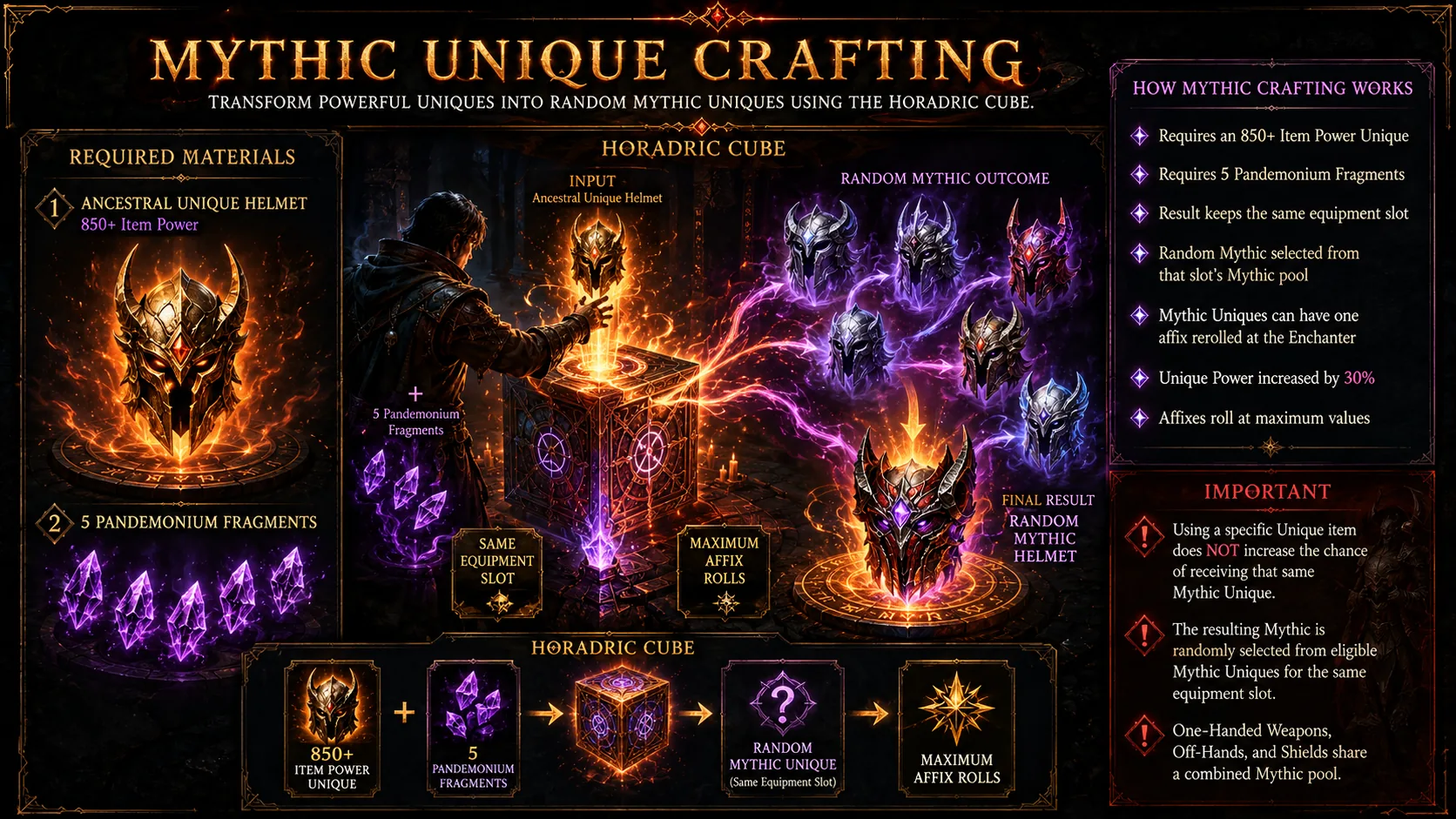
Mythic Uniques 3.0 gets a lot of hype, but here is the part that changes routine:
- Any Unique can move into Mythic form through conversion or drop.
- Conversion follows slot context more tightly than before.
- The upgraded item changes your planning cadence, not just your stats.
Because of the slot-linked conversion approach, your best path is usually:
- Pick one target slot.
- Stay in that loop.
- Expand only when conversion efficiency drops.
That’s the opposite of old-school “collect and chase everything” behavior.
And honestly, that can feel good. You get faster clarity on whether your launch loop is working.
Solo Self Found changes

SSF in Season 14 is no longer just a style pick, it’s a planning model.
When you choose SSF for a season character, you accept:
- No trade/stash safety net during the season.
- No party-based fallback.
- No Free Trial / Couch Co-op / Dark Citadel options for that character during the season.
If that sounds restrictive, it is—so your first setup move should be stricter resource planning, not looser one-off upgrades.
In practice, SSF players win by protecting build coherence:
- Stable slot priorities.
- Predictable conversion targets.
- Measured reward objectives.
If you enjoy this, SSF becomes very rewarding in Season 14 because progress feels like a full season arc, not a pile of incidental drops.
Class/build prediction for launch week
Not a guaranteed meta declaration, but a field-tested prediction model:
- Fast-clear classes with smooth sustain usually hit value faster in the first 12 to 24 hours.
- Control-heavy builds tend to perform better in longer rupture chains and Deathtoll transitions.
- Pure burst builds can spike hard, but need repeated, reliable loops to stay efficient.
For fewer bad starts, go with whichever class can hold rhythm longer, not only burst windows.
Tower and leaderboards
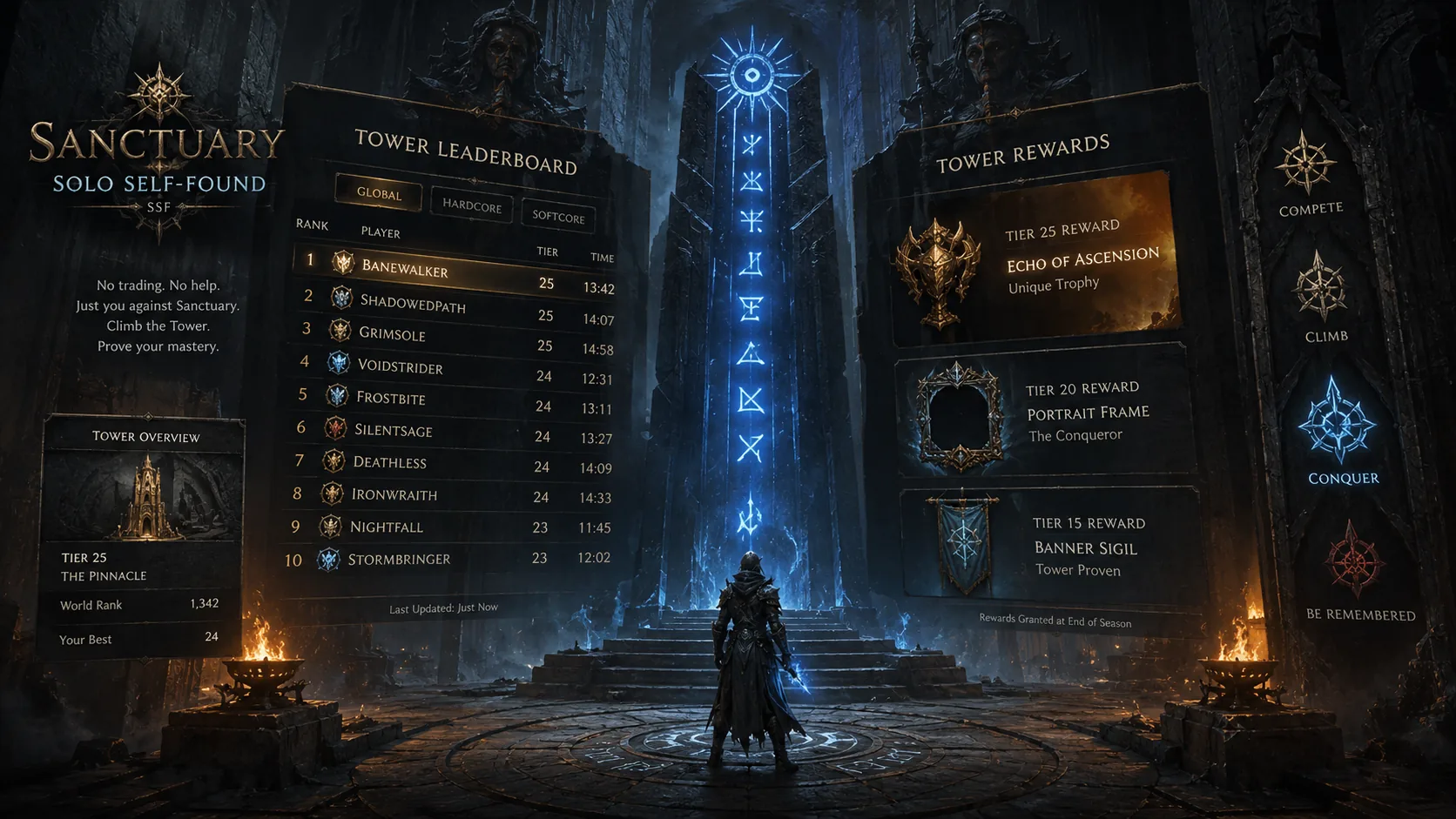
- Rewards at each cycle reset and season end.
- Seasonal titles and Halos.
- Separate SSF leaderboard tracks.
If you’re not chasing top one, focus on one threshold and repeat it reliably before moving up.
Quality of life upgrades
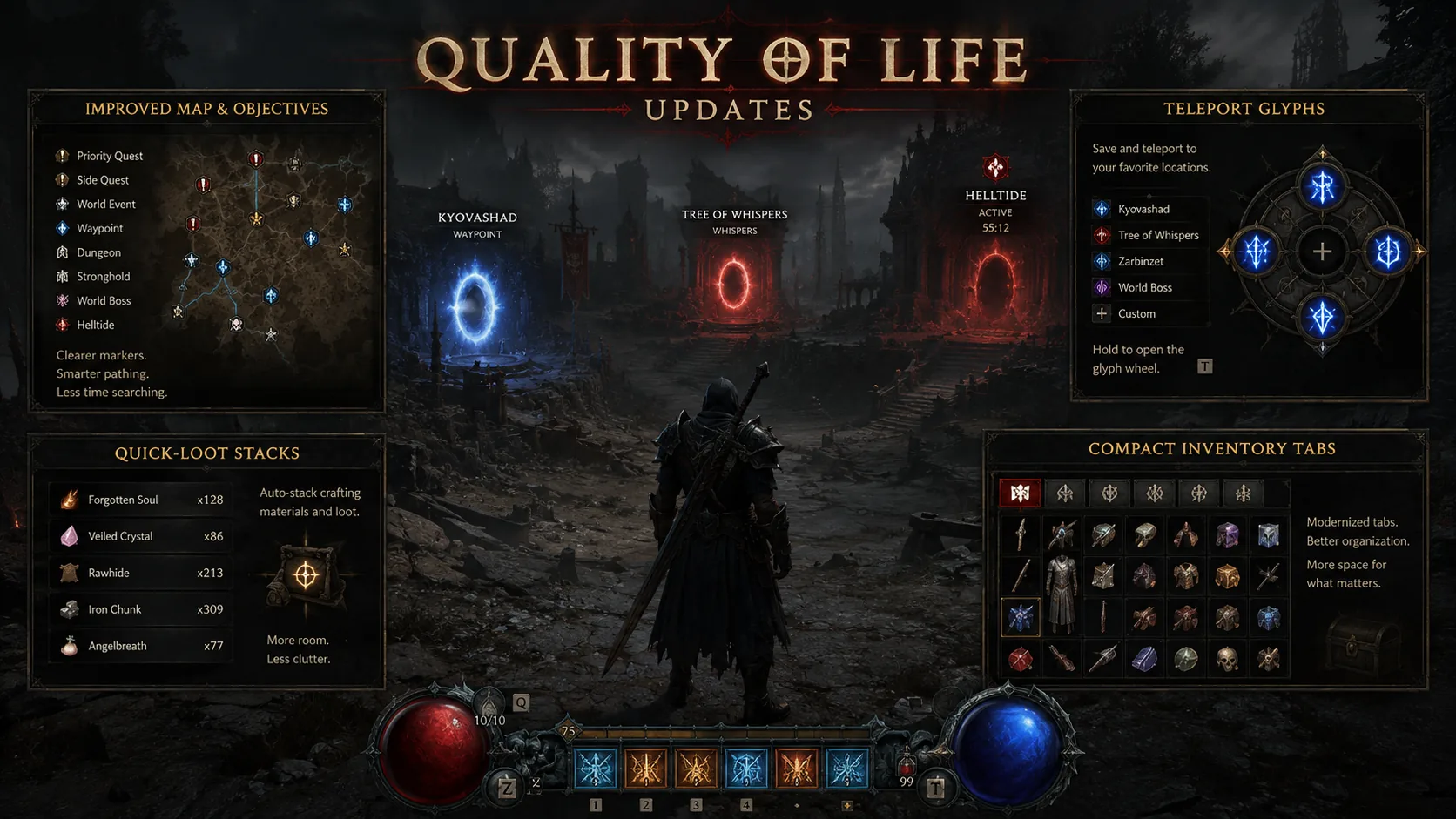
You can’t win a long season by treating side systems as optional:
- War Plan sync supports team efficiency.
- Higher caps for Obols to 25,000 and Gold to 999,999,999,999.
- Seasonal crossover rewards are useful bonuses if planned correctly.
QoL changes are the systems that remove hidden interruptions.
Launch-week checklist
Use this as a quick routine:
- Day 1: pre-download, log in on patch day, map one rupture loop.
- Day 2: lock your first Mythic upgrade lane (one slot, one path).
- Day 3: run Surging chains and test Deathtoll flow.
- Day 4: decide SSF vs non-SSF strategy for your main character.
- Day 5: tune one Tower leaderboard lane and stop chasing rank noise.
Quick verdict
The patch is less about a single biggest change and more about a better rhythm model:
- Keep events open longer.
- Convert with intention.
- Make seasonal gains repeatable.
If you execute the sequence, you don’t just farm more.
You farm cleaner.